
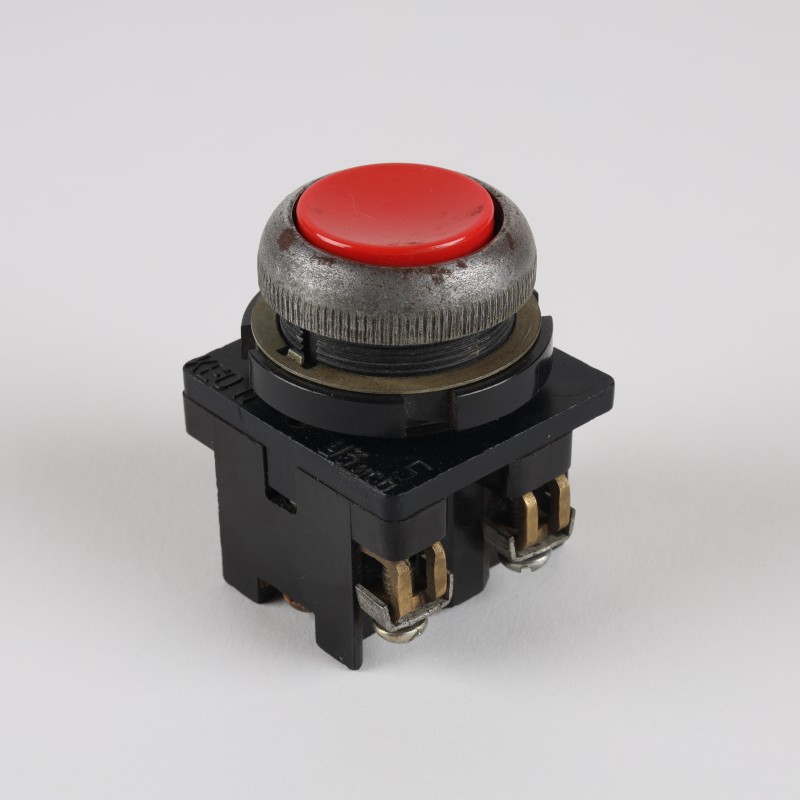
Кнопка управління КЕ 011 УЗ
| Author | Kurskyi elektromekhanichnyi zavod (?) |
|---|---|
| Date of creation | 1987 |
| Classification | Material objects |
| Material | Метал, Пластмаса |
| Technique | Заводська збірка |
| Dimensions (W×D) | 4 × 5.5 cm |
| Museum | National Museum “Chornobyl” |
Description
The KE 011 UZ push-button has a rectangular base of black dielectric plastic, 30×40 mm, assembled from two parts held together by screws. One screw shows traces of corrosion; above it is the mark ~500V, below it ~220V. Above and below the opposite screw are the marks 10A. In the middle is the manufacturer's logo: two semicircular arrows forming a circle with the letter R inside. On the part projecting above the screws is a relief inscription in Russian, "made in the USSR". The upper part has at its centre a hollow cylinder 20 mm high and 28 mm in diameter, threaded on the outside, with a locking ring and a metal clamping nut. The nut, 32 mm in outer diameter, is knurled for easy mounting and carries numerous small spots of corrosion. Inside the hollow cylinder, 25 mm high and 24 mm in diameter, is a red plastic plunger with a steel spring inside. In the upper left corner of the upper part is the mark "87", the year of manufacture; at the bottom are the marks "KEO 11" on the left and "UZ isp5" on the right, indicating the product type. The KE 011 UZ button is designed for switching power, control and signalling circuits with a DC voltage of up to 440 V and a current of up to 10 A. It switches on or off without locking in position. The contact group consists of two standardised elements, a control device and special parts that orient and fasten the switch to the panel. The KE 011 UZ button was widely used on the power control panels of the unit control rooms of nuclear power plants and in reactor protection control systems. It was exactly such a button, AZ-5 (emergency protection), that senior reactor control engineer Leonid Toptunov pressed at 01:23:40 on 26 April 1986 to shut down the reactor; a few seconds later the reactor exploded.
Similar objects
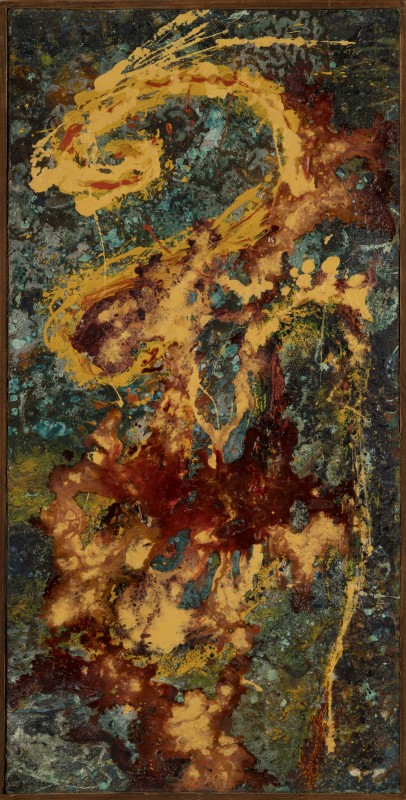
Картина. Період напіврозпаду (із циклу “Музика сфер”)
National Museum “Chornobyl”
1993
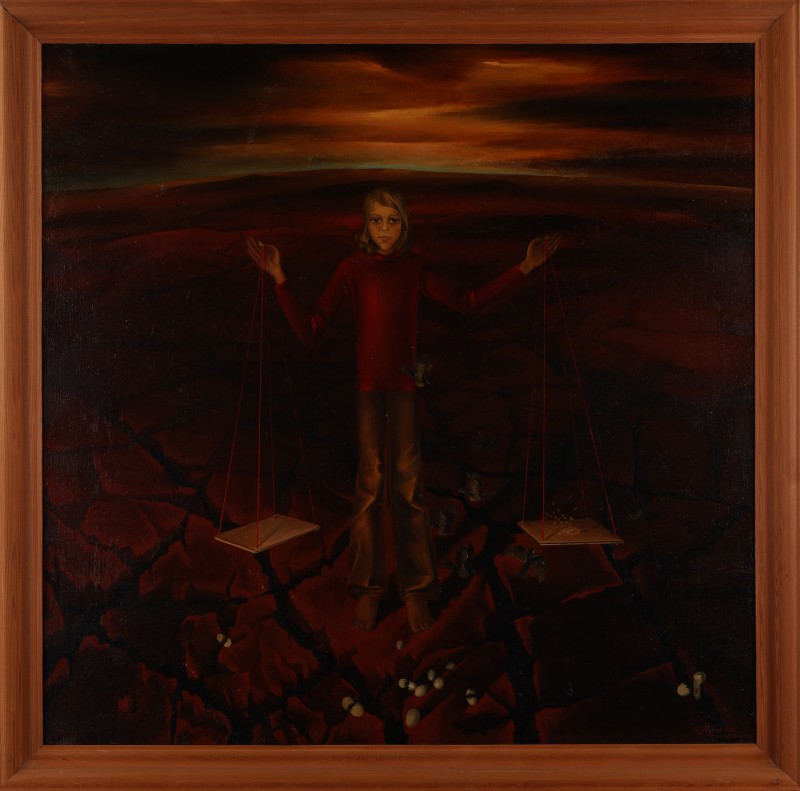
Картина “Я хочу жити”
National Museum “Chornobyl”
1986

Картина. “Бачити — вже володіти”
National Museum “Chornobyl”
1998
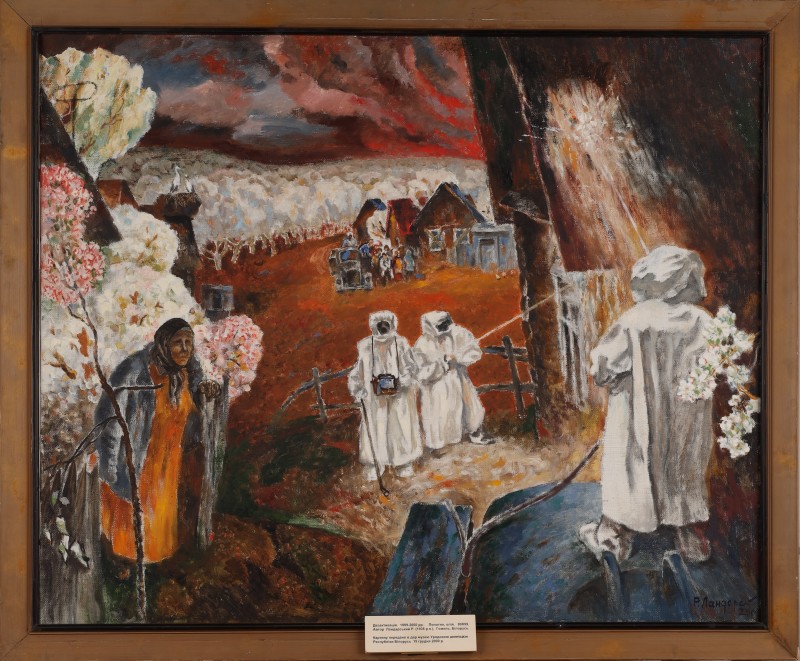
Картина “Дезактивація”
National Museum “Chornobyl”
1999-2000
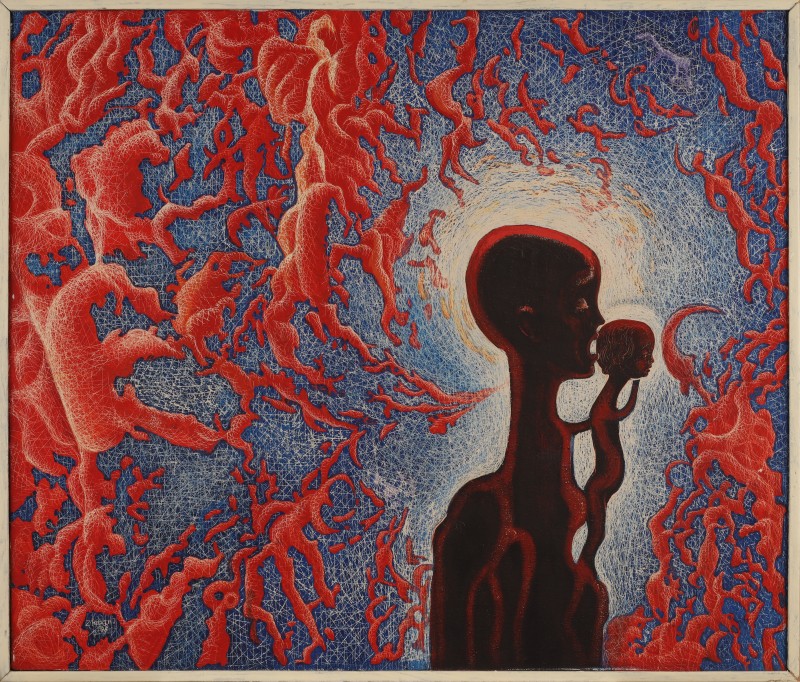
Картина “Чорнобильська мадонна” (“Апокаліпсис”)
National Museum “Chornobyl”
1996
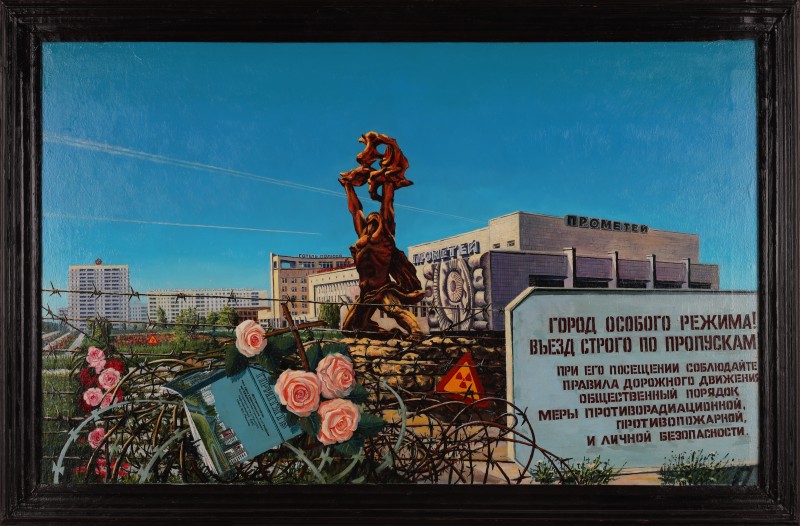
Картина “Прип’ять-86”
National Museum “Chornobyl”
2000
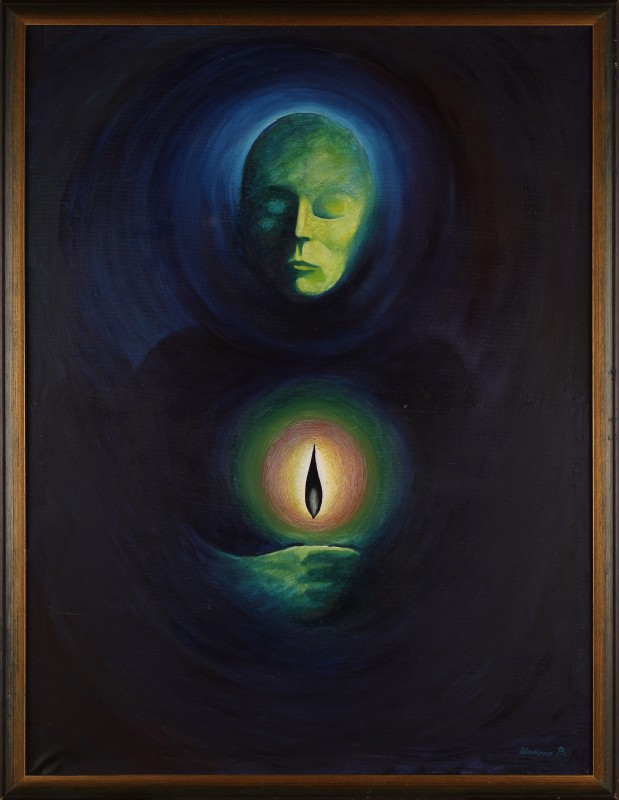
Картина “Чорна свічка”
National Museum “Chornobyl”
Жовтень 1991
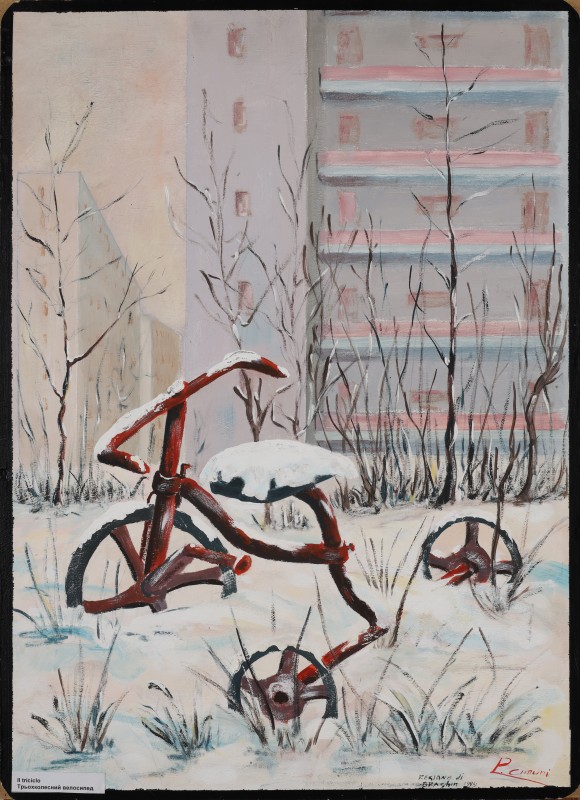
Картина “Il triciclo” (укр. м. — “Триколісний велосипед”)
National Museum “Chornobyl”
1999
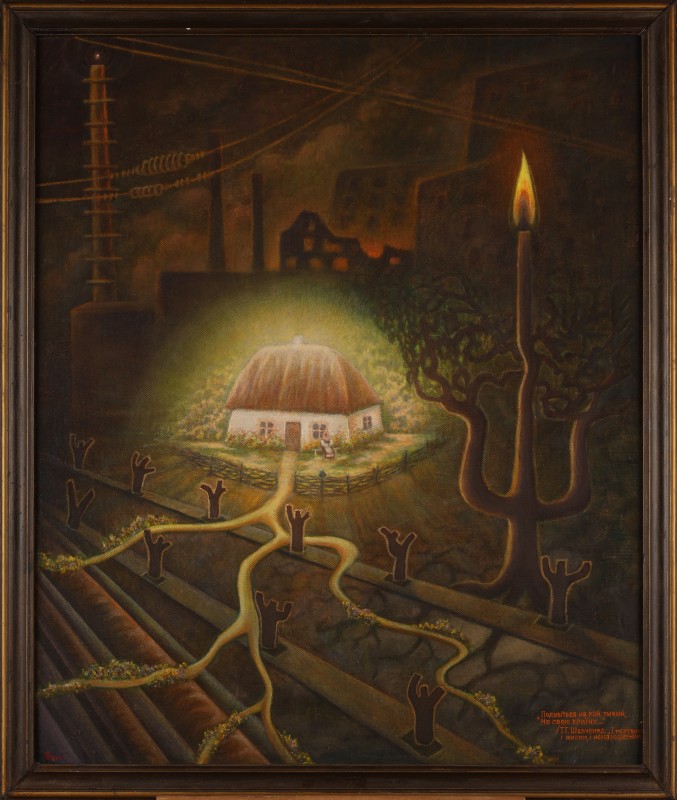
Картина “Спомин про життя”
National Museum “Chornobyl”
1989
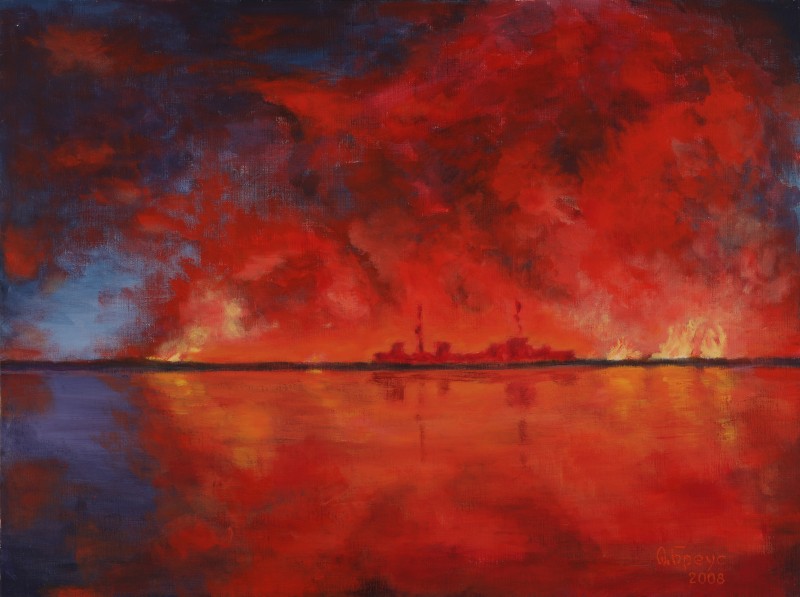
Картина “Загибель Чорнобильського Титаніка”
National Museum “Chornobyl”
2008
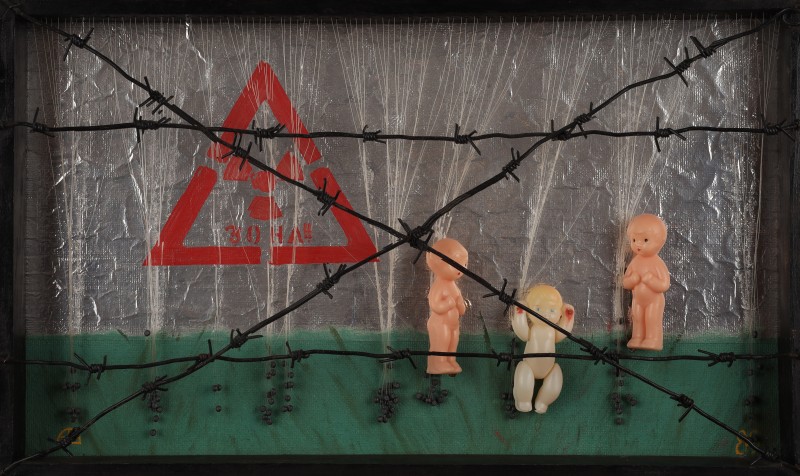
Картина “Чорнобильський дощ”
National Museum “Chornobyl”
1989
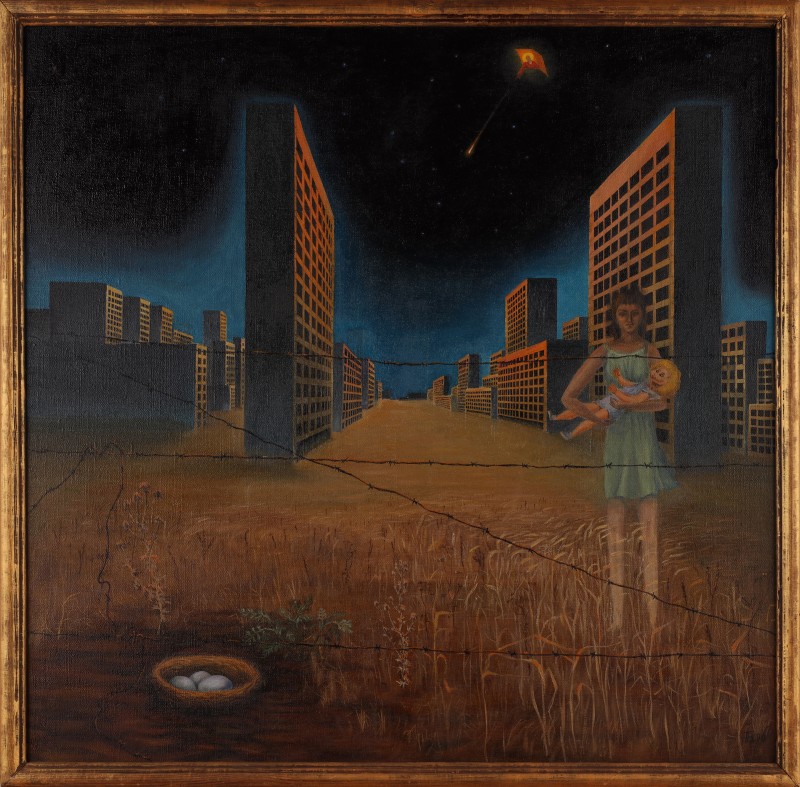
Картина в рамі “Зірка Полин”
National Museum “Chornobyl”
1990