Ukrainian patrons who created the museum map of Ukraine
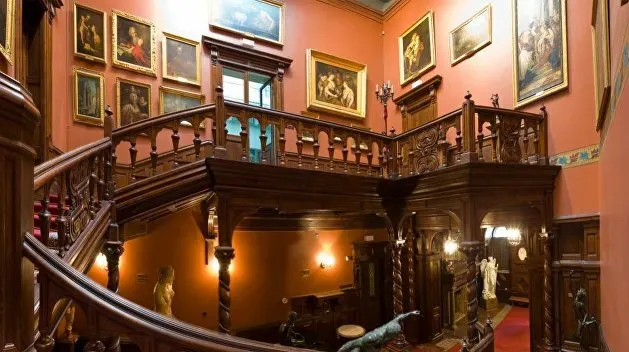
A museum is not just a building or a collection. It is an expression of memory, care and foresight. Many Ukrainian museums we visit today came into being not only thanks to state initiative but thanks to patrons: people who invested their fortunes, time and heart in culture. Their names are often only modestly mentioned in museum texts. Yet without them the museum map of Ukraine would not have its scale and depth.
Patronage as a form of national service
In the Ukrainian tradition, supporting culture was not just a display of wealth: it often became an act of self-sacrifice and service to the idea of the nation. In the 19th and early 20th centuries, in the absence of statehood, it was patrons who supported the first collections of antiquities, financed excavations and preserved art, folklore, archives and folk crafts.
Who are they, the creators of Ukraine's museum map?
Bohdan and Varvara Khanenko are a classic example of a couple who devoted their lives to art. Their private collection, gathered over decades, became the basis of the Khanenko Museum in Kyiv. Their wish was to make world art accessible to Ukrainian viewers regardless of social status.
Mykola Biliashivskyi was an ethnographer, archaeologist, activist of the Ukrainian movement and one of the founders of the Kyiv Museum of Antiquities (now the NMHU, NAMU and NMDAU). His patronage was intellectual: he collected, described and preserved, and above all built the concept of Ukrainian museum work.
Vasyl Tarnovskyi Jr., a descendant of a well-known family, was a collector who handed over more than 7,000 objects to the Chernihiv Museum of Ukrainian Antiquities. It is thanks to him that we have unique exhibits related to the life of Taras Shevchenko, the Cossacks and the Hetmanate.
Pavlo Zholtovskyi and Ivan Honchar were, in the 20th century, among those who preserved the living tradition despite Soviet control. Ivan Honchar, in particular, created a private museum of Ukrainian culture in Kyiv, which today is the National Centre of Folk Culture “Ivan Honchar Museum”.
The Tereshchenko and Symyrenko dynasties of patrons supported not only theatres and education but also collections that became the basis of public museums in Kyiv, Chernihiv, Poltava and Hlukhiv. Their involvement was not occasional but systematic: buildings, exhibits, scholarships and purchases of works of art were all invested in the future cultural infrastructure.
Patronage in museums today: continuing the tradition
Today's museums again need support, especially in wartime. And today a patron is not only a millionaire. It is anyone who supports a fund, buys a ticket, donates an artefact, helps with digital projects, provides expertise or volunteers.
These are all examples of 21st-century patronage, which combines technology, ideas and civic participation.