3D scanning of monuments: how digital copies help preserve cultural heritage
This year Ukraine stepped up its work on digitising cultural heritage. In late spring, a mobile 3D scanning station started operating at the Kyiv-Pechersk Lavra as part of the ARK III project. In July, the Ministry of Culture approved unified recommendations for creating and storing digital data.
Teams united by the idea of preserving cultural heritage with digital technologies are also running their own projects. One of them is Skeiron from Lviv, which has worked in this field since 2016.
We have written before about 3D models in museums and how they are made. Skeiron's experience shows how this works in practice.
Which museums have already been digitised and how objects are chosen
In Lviv, Skeiron has worked with a number of museums, including the Lviv Historical Museum, the Mykhailo Hrushevsky and Ivan Franko museums, the Lviv Museum of the History of Religion, the Museum of the History of Wars, Struggle and Resistance, and the Roman Shukhevych Memorial Museum.
The team has also digitised the Archaeological Museum of the I. Krypiakevych Institute of Ukrainian Studies of the NAS of Ukraine and the Museum of Modernism, a branch of the Lviv National Art Gallery. In the region, it has digitised the Yevhen Konovalets Historical and Memorial Museum in Zashkiv and the Markiian Shashkevych Museum in Pidlyssia.
Several criteria are taken into account when choosing objects. Priority goes to monuments of national significance, as well as museums at risk of damage or already affected by the war.
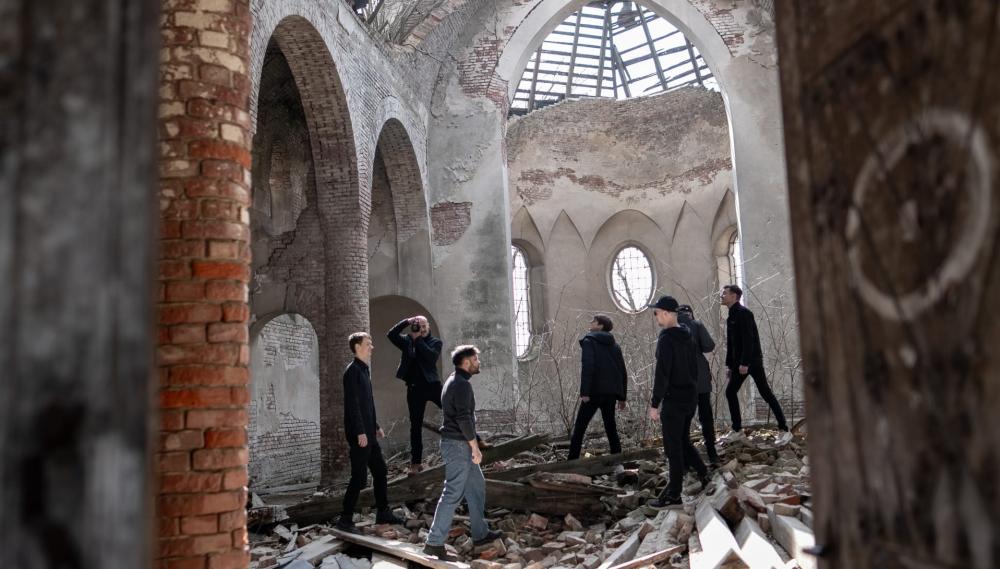
Museums and local communities also come forward with proposals themselves. Some projects are carried out with grant support, in particular from the Ukrainian Cultural Foundation and international partners.
Digital copies are made not only in case the original is lost. They also help museums open their collections to people who cannot see them in person.
From laser scanning to a virtual tour
Different technologies are used for different objects. Skeiron digitises individual museum objects mainly by photogrammetry. The exhibit is photographed from different angles, and special software then builds a three-dimensional copy from these images.
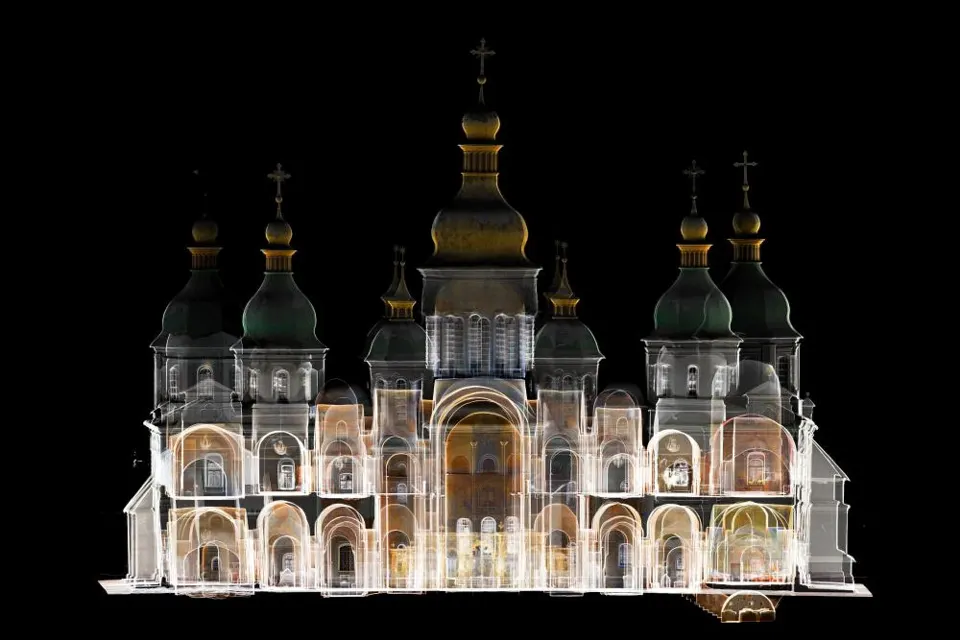
For buildings, photogrammetry is combined with laser scanning. The team works with RIEGL VZ-400i and Leica ScanStation P20 instruments. They create a point cloud from which the shape and dimensions of a building can be reproduced to within a few millimetres. Photogrammetry helps convey its appearance: textures and surface details.
The collected information is combined into a single 3D model and cleaned of random objects. If needed, drawings or a BIM model can be created from it.
For virtual tours, Skeiron uses Matterport and 360° spherical panoramas. This is how the team created online tours of ten departments of the Lviv Historical Museum.
Such data become especially valuable when a monument is damaged or destroyed, as they serve as direct evidence of Russia's war crimes. For example, the Skeiron team managed to scan the Roman Shukhevych Memorial Museum in detail before Russian shelling. Immediately after the attack, specialists recorded the damage and compared it with the earlier 3D model.
This precise comparison of the building's condition “before” and “after” the strike is verified digital evidence of the deliberate destruction of cultural heritage for international courts, and an indispensable basis for the future reconstruction of the museum.
How a 3D model is made
The process depends on the scale of the object, but the main stages are similar. It all starts with preparation.
The team travels to the site, plans the scanning points, checks the lighting and, where possible, removes unnecessary objects from the frame. When working with a single exhibit, it is photographed from dozens or hundreds of angles to capture every detail.
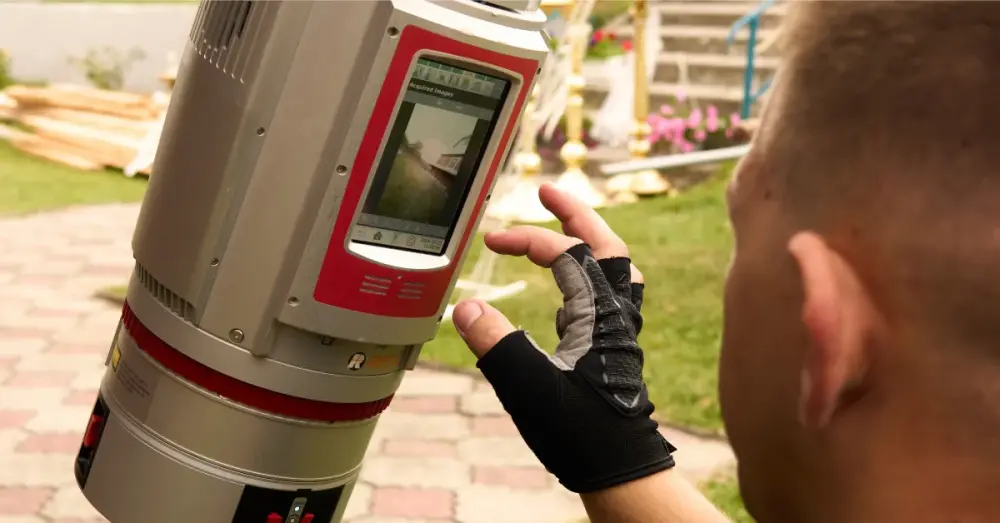
Next, the photographs, laser measurements and panoramas are gathered together. Processing takes the most time: the materials are combined into a single model, cleaned of random objects, the textures are corrected and the accuracy is checked.
The result depends on the task. It may be a high-precision 3D model for archiving or restoration, an interactive virtual tour or a digital copy of a single exhibit that can be rotated and viewed from every side.
What makes digitisation difficult
Skeiron sometimes deals with objects that require a special approach. A fragile exhibit cannot always be moved or placed at the right angle, and shiny and transparent surfaces are harder to reproduce accurately. Halls with complex layouts may also need extra preparation.
The team also has to adapt to the museum's own schedule. Halls are often scanned when there are no visitors, and the work is coordinated with the administration, curators and restorers.
There is a financial side too. High-precision equipment and specialised software are expensive, and processing takes a lot of time. That is why Skeiron carries out some of its projects with grant support from Ukrainian and international partners.
The team also notes that museums increasingly understand the value of digital copies. They are not only a way to show collections online but also a chance to preserve information about them, even if the originals are damaged or lost.
How museums use digital materials
The data collected during scanning record the condition of an object at a specific moment and may be needed during restoration.
Digital models are also used for research. Scholars can work with them remotely: rotate objects, take measurements and analyse details without unnecessary contact with the originals. For example, Skeiron created 3D models of 22 archaeological artefacts for the Lviv Museum of the History of Religion.
Virtual tours and audio guides make it possible to “visit” museums from anywhere in the world. Ten departments of the Lviv Historical Museum can now be explored online.
The same 3D scan can be used in different ways: for AR, interactive quests, tactile models and audio descriptions. At the Aviation Museum the Skeiron team developed the quest “Prepare a plane for the Ghost of Kyiv”, and in projects in Rivne and Volyn regions it made tactile models of castles and interiors with Braille and audio guides for people with visual impairments.
What next
In Lviv Oblast, Skeiron has already digitised more than 180 objects, from museum items to UNESCO sites and unique wooden churches. This has formed a digital archive that can be used for research, restoration, education and promoting heritage.
The plans also include digitising the façades of historic buildings in central Lviv. One of the priorities is the area within the UNESCO zone. It is to be recorded in detail to preserve accurate information about the authentic appearance of this part of the city.
Another direction is the “Zahyblyky” (Perishing) project, devoted to Ukrainian architectural monuments in critical condition. The goal is to create accurate 3D models of them while it is still possible. Later these materials may be needed for research, restoration and reconstruction.
Photos: from the official website of Skeiron