Trypillia: a culture still to be understood
The Trypillian culture, or Cucuteni–Trypillia culture, is one of the most striking and mysterious archaeological cultures of Europe. It existed on the territory of present-day Ukraine, Moldova and Romania in the 6th–3rd millennia BC, long before the Egyptian pyramids, Greek temples and Sumerian cuneiform.
It is an ancient culture whose legacy is still being actively studied, reinterpreted and, quite literally, dug out of the ground.
What we know for sure
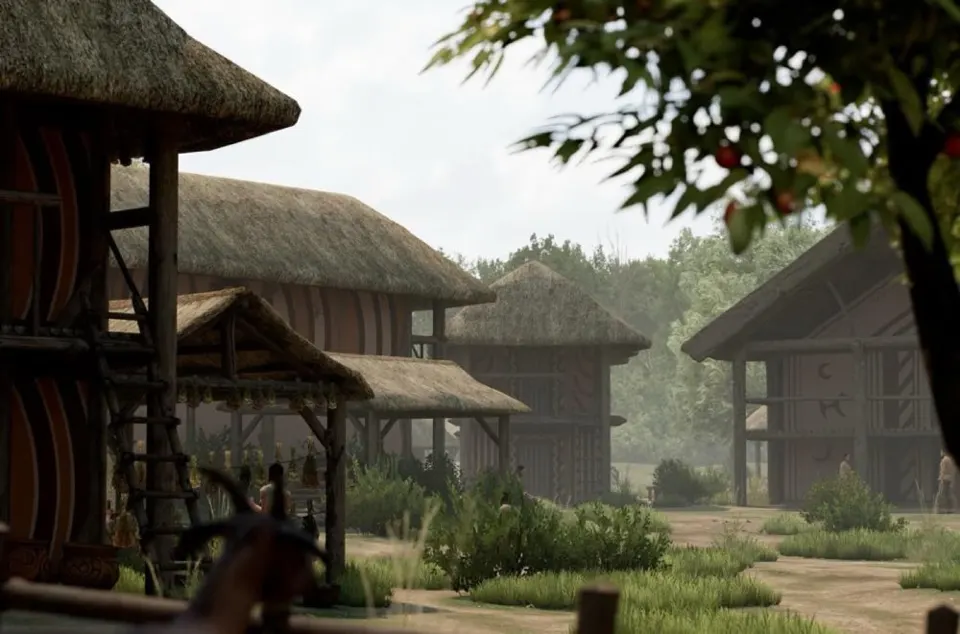
The Trypillians built clay houses: large, multi-room, often with clay ovens and even two storeys. They made sophisticated pottery painted with geometric and spiral designs in red, black and white. They farmed the land, kept livestock, and made looms, spindle whorls, flint sickles and copper tools. They also made clay figurines of women, animals and models of houses, probably for ritual purposes.
Trypillian settlements covered up to 300 hectares and sometimes more, almost the size of a medium-sized modern town. They had planned layouts with clear streets and public spaces, which indicates a high level of organisation.
What remains a mystery
- Writing. It either did not exist or has not survived. Some signs on pottery are interpreted as symbols, possibly elements of proto-writing, but there is not enough evidence.
- Language. We do not know what language the Trypillians spoke. This makes their identity a matter of debate.
- Social structure. There is little archaeological evidence of hierarchy. Some researchers consider the culture matriarchal or at least marked by cult veneration of the mother.
- Religion. There are hypotheses about a fertility cult, female deities and a connection with natural cycles. But there are no written sources, only material hints.
Why did they burn their settlements?
One of the most striking features is the ritual burning of houses. Archaeologists find whole settlements in which buildings were destroyed by fire.
Possible reasons:
- Religious ideas about purification by fire;
- Transition to a new life cycle, a symbolic renewal of space;
- Social or environmental factors.
But there is no specific, proven answer yet.
A new reading of Trypillia: current research
In the 21st century the Trypillian culture has attracted the attention of not only Ukrainian but also European scholars. New discoveries have prompted a rethinking of this culture:
- In 2012 a British-Ukrainian expedition at Nebelivka discovered a unique building that may be considered a Trypillian temple, with an altar, ornaments and pottery fragments.
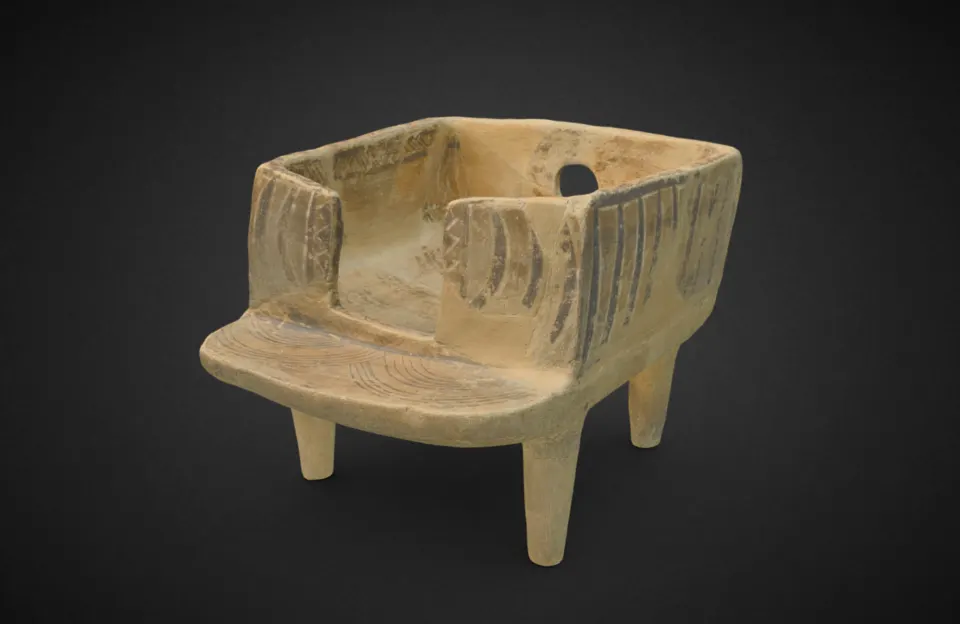
- Thanks to 3D technologies, digital models of the most important artefacts have been created, in particular the model of the temple from Volodymyrivka, which is now the subject of study and virtual reconstructions.
- New approaches in archaeobotany, isotope analysis and geophysics help us understand the Trypillians' way of life better than ever before.
Where are artefacts of the Trypillian culture kept?
Exhibits of the Trypillian culture are kept in many museums in Ukraine and abroad. Here are the main institutions where you can see or study the Trypillian heritage:
National Museum of the History of Ukraine (NMHU), Kyiv
One of the richest collections of Trypillian artefacts: pottery, figurines, tools, models of houses. This is where the famous model of the Trypillian temple from Volodymyrivka is kept.
“Trypillian Culture” State Historical and Cultural Reserve, Legedzyne village, Cherkasy Oblast
Located directly in the area of Trypillian settlements, its collection numbers about 100,000 artefacts of the Trypillian culture. It has a museum and an archive and conducts field research.
Cherkasy Regional Museum of Local History
It has a large selection from the Uman and Kirovohrad areas, including materials from the settlements of Volodymyrivka, Talianky and Dobrovody.
Vinnytsia Regional Museum of Local History
It holds numerous artefacts from Podillia, one of the centres of the Trypillian culture.
Kyiv Regional Archaeological Museum
It has a large permanent exhibition of Trypillian pottery and keeps its own collection of Trypillian artefacts from excavations in Kyiv Oblast.
More about museums and where to find artefacts of the Trypillian culture can be found on the emuseum.online platform.
Trypillia is not only antiquity. It is potential for new discoveries
Today the Trypillian culture does not belong only to historians. It has entered contemporary art, design, national branding and museum education. Trypillian patterns appear in interiors, logos and even digital art.
But most importantly, we are beginning to see Trypillia as our own civilisational heritage, not peripheral but central.
Knowledge about the Trypillians is not only about the past but also about understanding our place in the world. It is a shared memory that is still taking shape, and every new discovery adds to it.
Digitised exhibits courtesy of the NGO “eMuseum”