Shadow, line, structure: the language of the graphic image
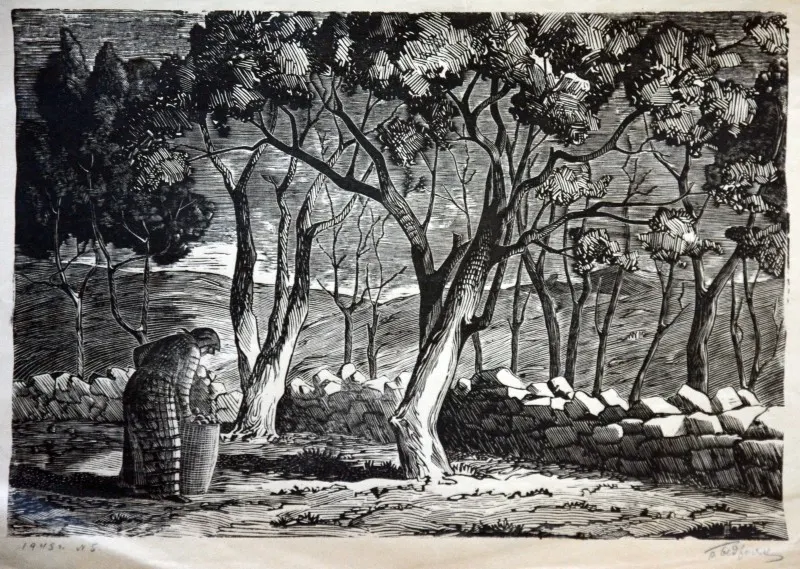
Graphic art is an art in which few means produce a very powerful result. Line outlines form, shadow creates depth, and the structure of the composition holds the gaze and the meaning. That is why a graphic image is often perceived especially sharply: it does not dissolve in a wealth of colour but speaks through rhythm, contrast, stroke and the white space of the sheet.
In graphic art everything matters: how the contour runs, where the stroke stops, how black and white, plane and volume relate to each other. It is a laconic but highly expressive language. It can be decorative, documentary, psychological or symbolic, and in each case it works through the precision of the visual statement.
The origins of Ukrainian graphic art
Ukrainian graphic art has a very old tradition. Its development began in the era of Kyivan Rus', when the appearance of the manuscript book in the 11th–12th centuries gave a powerful impetus to book illustration. Masters decorated manuscripts with headpieces, initials, miniatures and small drawings in the margins, forming a coherent artistic system. Manuscripts such as the Ostromir Gospels, the Izbornik of Sviatoslav, the Trier Psalter, the Yuriev Gospels and the Dobrylo Gospels already show the main features of this language: solemn composition, decorativeness, conventional flatness and attention to the rhythm of form.
In the following centuries book graphics developed together with the manuscript and printed book. Ornament grew more complex, the role of the human image increased, and floral, geometric and interlace motifs appeared in the decoration. Ukrainian early printed books and engravings of the 16th–18th centuries continued this tradition, combining local ornament with Renaissance and Baroque influences.
From engraving to the easel print
Ukrainian graphic art flourished especially in the age of printing. Editions from the Lviv, Ostroh, Pochaiv, Chernihiv and Kyiv printing houses show how important graphics were for book culture. Title pages, frontispieces, headpieces, initials and narrative illustrations turned the book into a coherent work of art.
In the 19th century graphic art went beyond book decoration and increasingly developed as an independent art. New techniques appeared: etching, aquatint, lithography and wood engraving. Portrait, landscape, historical and genre scenes took the leading place. The central figure of this stage was Taras Shevchenko, who raised Ukrainian graphic art to a new level, combining great skill with deep humanistic and national content.
An image that preserves memory
In the 20th century Ukrainian graphic art expanded its possibilities even further. It worked in book design, easel prints, posters and original printmaking. It is characterised by a diversity of techniques, individual styles and artistic searches. But the main thing remains unchanged: graphic art thinks through line, chiaroscuro and compositional discipline.
That is why graphic works preserve historical memory so well. They record not only the appearance of objects or figures but also the character of an era, a way of seeing the world and the inner tension of the time. In graphic art one feels especially clearly how maximum expressiveness can be achieved with minimal means.
Where to see graphic works today
Today you can get to know Ukrainian graphic art not only in museum halls but also online. The Register of the Museum Fund of Ukraine is the official information and communication system for recording and presenting data on museum objects and collections of the state part of the Museum Fund of Ukraine, and the portal has pages for individual graphic works from museum collections.
This is especially important today, as digital access lets you see graphic works from the collections of different Ukrainian museums, compare techniques, subjects and artistic manners, and rediscover the Ukrainian artistic tradition. Through shadow, line and structure, graphic art continues to speak to us: precisely, with restraint and very convincingly.
Cover image: the engraving “In the Gardens of Yerevan” from the collection of the Odesa Museum of Western and Eastern Art