POLIN: a thousand years of history in the space of a modern museum
At the POLIN Museum, visitors walk through a symbolic forest, find themselves in the square of a Jewish shtetl, print a page of an old book, enter a pre-war cinema and listen to people's voices.
Here history, including its difficult and traumatic pages, can not only be seen in exhibits and documents but also understood through space and interaction with it.
Architecture, reconstructions, sound, video and interactive elements lead through the thousand-year history of Jews in the Polish lands, from the first settlements to the present day.
This model was laid down when the museum was created. Since many historical sources and objects have not survived or have survived only in part, the basis of the display was not a museum collection but history itself. POLIN was conceived as a “museum of life” that tells this history not only through the tragedy of the Holocaust.
Architecture as part of the museum's story
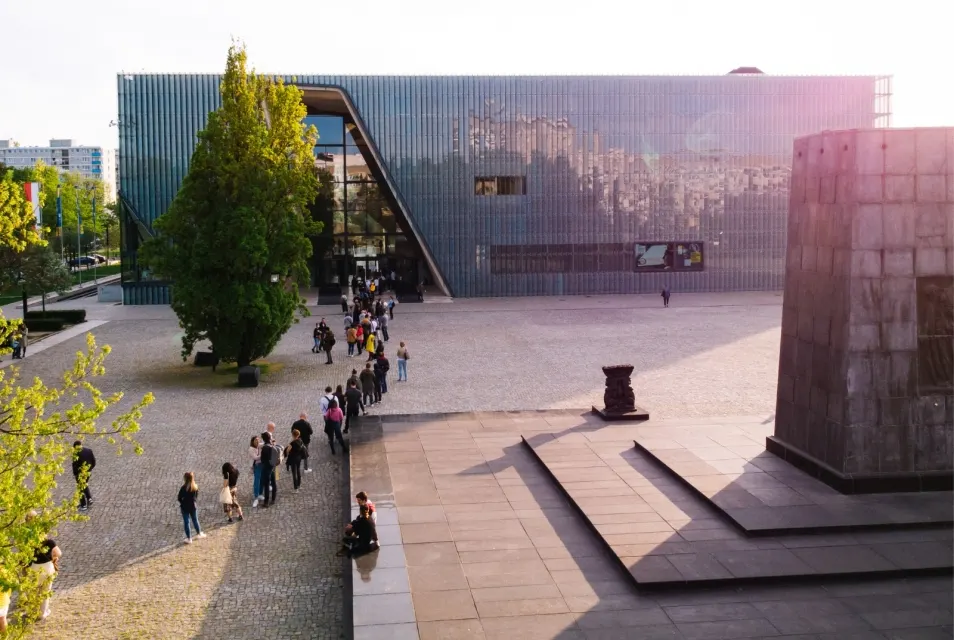
The POLIN Museum is located in Warsaw's Muranów district, in the centre of the former Jewish quarter, which the Germans turned into a ghetto during the Second World War. Opposite stands the Monument to the Ghetto Heroes. From the outside it is a restrained glass building designed by the Finnish firm Lahdelma & Mahlamäki. Inside, however, the space changes dramatically.
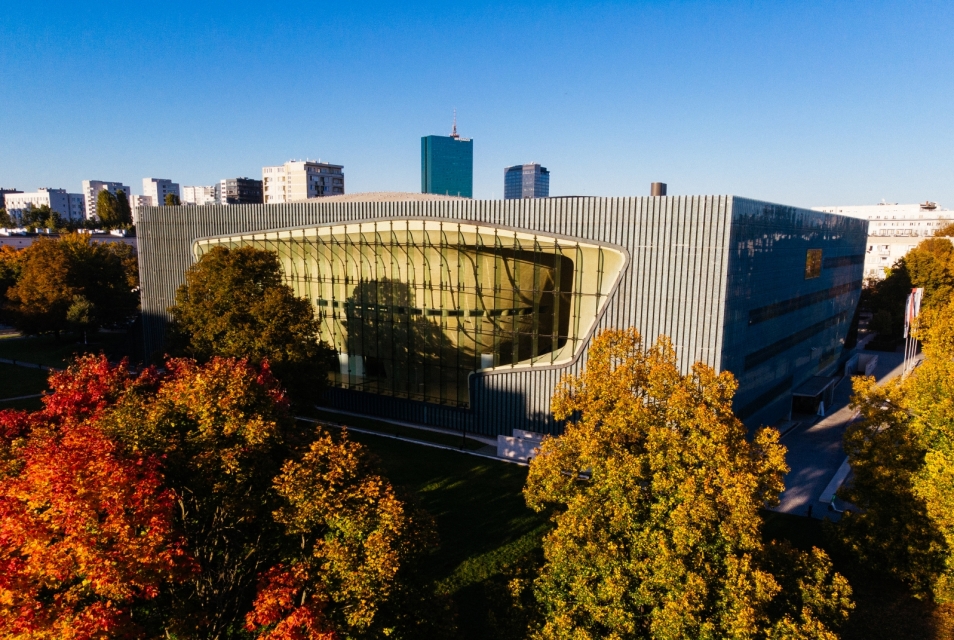
The central hall is crossed by tall undulating walls resembling a canyon carved by a turbulent river. The gap between them symbolises the rupture in the thousand-year history of Polish Jews caused by the Holocaust.
At the same time, the path leads towards the light and greenery of the park. In this way the architecture speaks of both irreparable loss and life that goes on.
History recreated in space
The permanent display is built as a journey through different eras. It begins in a symbolic forest where the legend of the Jews' arrival in the Polish lands is told. The word “Polin” means “here you will rest” in Hebrew and is also the name of Poland.
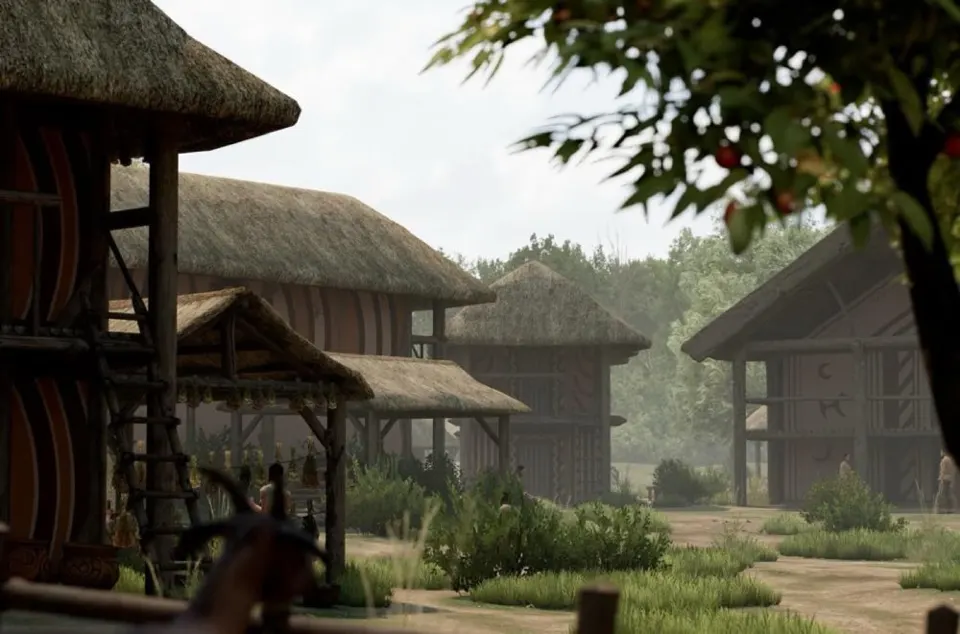
Next come the market square of a Jewish shtetl, an inn and living quarters. Above them rises the brightly painted vault of the wooden synagogue from Gwoździec, reconstructed from historical materials using traditional tools and technologies. The synagogue itself was destroyed during the Second World War.
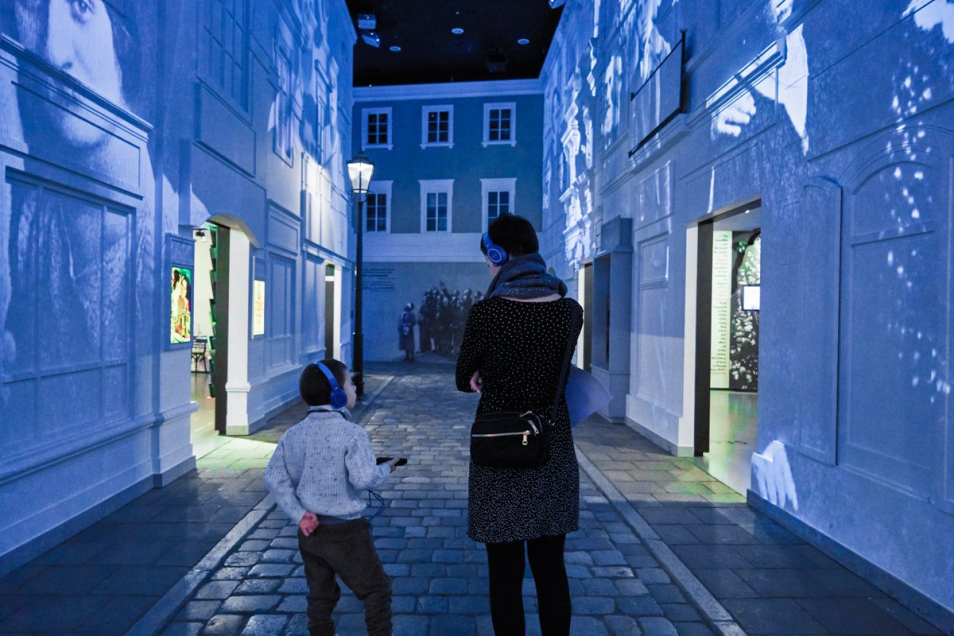
Another space recreates a Jewish street in interwar Poland. House façades, signs, a café and a cinema create the image of a city where different languages, views and cultural circles coexisted. History is revealed here through everyday life: what people read, listened to, discussed and saw around them.
Multimedia as a way to learn about the past
At POLIN visitors can not only look at exhibits but also interact with them. On a reconstructed printing press you can print a page of an old book, and at another interactive exhibit you can try minting a coin.
Another interactive invites you to choose which of the three states you would like to live in after the partitions of the Polish-Lithuanian Commonwealth. In this way a change of borders appears not simply as an event on the map but as a decision on which a person's future life depends.
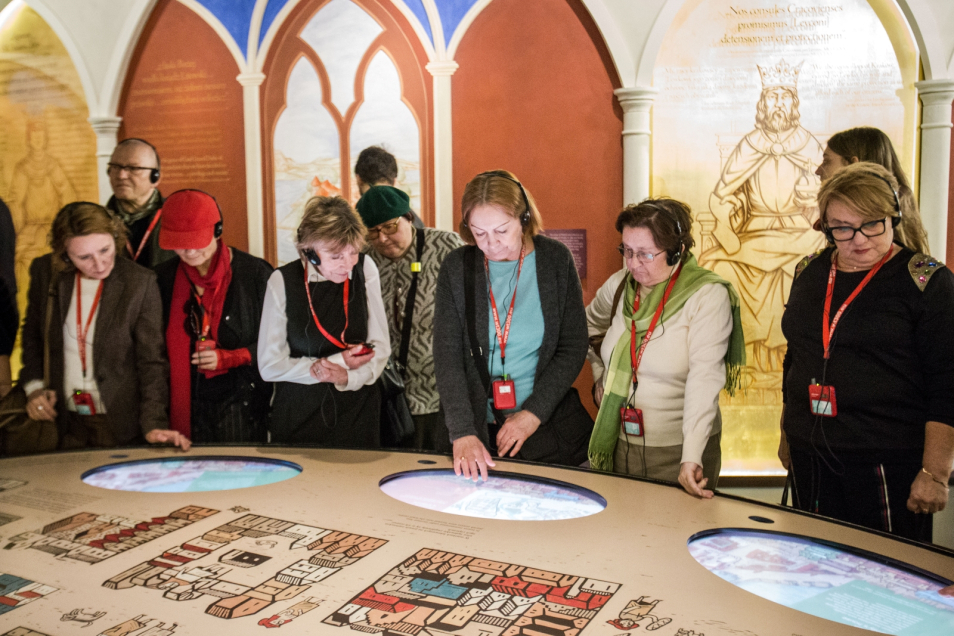
Screens, audio recordings, films, photographs, models and reconstructions help to show what no longer exists: destroyed synagogues, lost city quarters, pre-war cultural life. The Holocaust gallery presents documents and personal testimonies, including fragments of the Ringelblum Archive.
POLIN uses the same principle in temporary projects. For example, the exhibition “The Power of Words. On Jewish Languages” invites visitors to look, listen and write. Original objects and reproductions are combined with contemporary art, video and installations to tell about language as part of culture, memory and identity.
At POLIN technology does not turn into an attraction; it helps to understand the historical context, recreate a lost world and feel its atmosphere.
POLIN in Ukrainian and online
In 2019 a Ukrainian audio guide was created for POLIN's permanent display, along with a separate family guide for families with children aged 6 to 12. It is complemented by dramatised scenes performed by Ukrainian actors, and part of the narrative introduces the life of Jews in the Ukrainian lands.
Getting to know the museum is not limited to its halls: the permanent display can also be seen online as a virtual journey.
POLIN's experience is interesting for the way different museum tools complement each other. Here objects are combined with reconstructions, documents with the voices of witnesses, and historical research becomes the basis for interactive and multimedia solutions.
In this way the visitor does not simply learn about the past but gradually discovers it for themselves, through what they see, hear and do in the museum.
Photos: M. Starowieyska, M. Jaźwiecki / Museum of the History of Polish Jews