The Victoria and Albert Museum in London: from Raphael to the treasures of the Kyiv-Pechersk Lavra
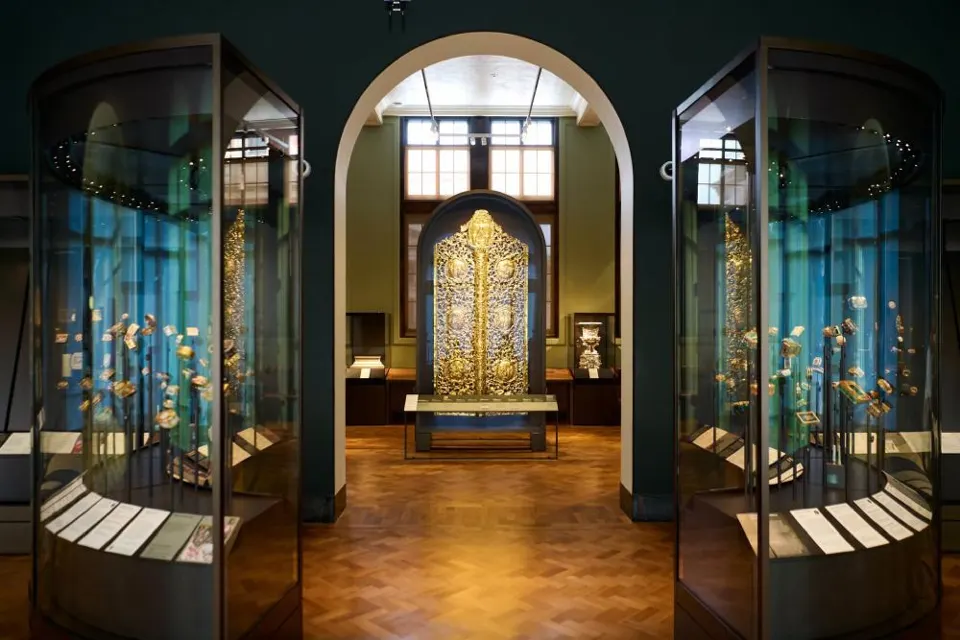
Designer dresses and medieval sculpture, ceramics and photography, jewellery, furniture, theatre costumes and Raphael's monumental works: at London's Victoria and Albert Museum you can see art in literally everything humans make.
Today a Ukrainian context is emerging ever more clearly in this story. The collection on display at the V&A includes two pairs of silver-gilt Royal Doors from the Kyiv-Pechersk Lavra, whose journey British and Ukrainian museum professionals are researching together. In September 2026 the V&A also presented, for the first time in the UK, seven works of Ukrainian Baroque from the collection of the Kyiv-Pechersk Lavra National Reserve.
So what kind of museum is it, where Ukrainian treasures stand alongside works spanning several millennia of world art history?
A museum that grew out of a world's fair
The history of the V&A began in the mid-19th century. One of the preconditions for its creation was the Great Exhibition of 1851 in London, considered the first world's fair. Almost 14,000 exhibitors from various countries and territories presented more than 100,000 objects there. Over five and a half months the exhibition was visited by more than 6 million people.
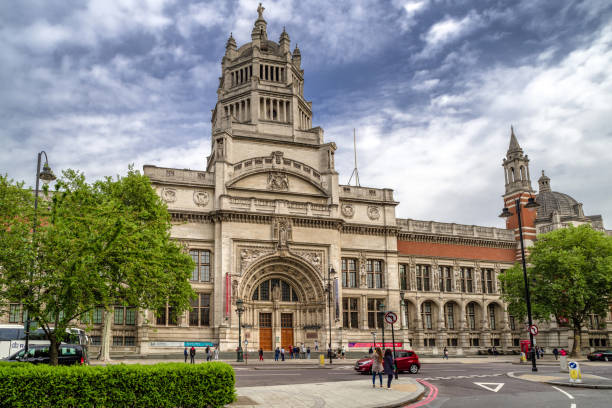
The very next year the Museum of Manufactures opened in London. Its purpose was practical: to introduce British designers, manufacturers and consumers to the finest examples of art and craft and thus raise the quality of industrial design. The museum's first director, Henry Cole, called it “a schoolroom for everyone”.
In 1857 the collection moved to South Kensington and was named the South Kensington Museum. The museum received its present name in 1899, when Queen Victoria laid the foundation stone of the new building and announced that the institution would henceforth be called the Victoria and Albert Museum, after herself and her husband Prince Albert.
Five thousand years of human creativity
Today the V&A is no longer a single museum but a whole family of museums. Its historic centre remains V&A South Kensington in London. The national collection as a whole numbers more than 2.8 million objects and covers roughly 5,000 years of human creativity.
What makes the V&A special is that the focus is not only on “high art”. The museum explores the man-made world much more broadly: from sculpture, painting and manuscripts to furniture, tableware, textiles, jewellery, photography, architecture, theatre, music, fashion and contemporary design.
This principle was laid down back in the 19th century. Visitors were not simply to look at a beautiful thing but to understand how it was made, from what material, what it was used for and why it looks the way it does. At one time the collection was even organised by materials and techniques: wood, textiles, ceramics, metal and other categories separately. The museum was meant to become a kind of three-dimensional encyclopaedia of design.
This approach can still be felt today. For example, the V&A fashion collection spans five centuries and is, in the museum's own words, the largest and most comprehensive collection of dress of its kind in the world. It includes garments from the 17th–18th centuries and works by Coco Chanel, Elsa Schiaparelli, Christian Dior, Cristóbal Balenciaga, Mary Quant and other designers.
When the museum itself becomes an exhibit
At the V&A it is worth looking not only at what is in the display cases. The museum's historic buildings themselves tell of changes in architecture and design from the second half of the 19th to the early 20th century.
One of the best-known spaces is the Cast Courts, opened in 1873. Large plaster and other copies of outstanding works of European architecture and sculpture were gathered here. Among them are a five-metre copy of Michelangelo's “David”, presented to Queen Victoria by the Grand Duke of Tuscany, a replica of Trajan's Column and copies of other monumental works that could not be brought to London in the original.
In the 19th century such copies played roughly the role that digital models have partly taken over today: they allowed students, artists and the general public to study monuments from other countries without travelling to them.
Another of Henry Cole's experiments seems quite ordinary today. It was at this museum that the world's first museum restaurant appeared in 1856. The idea was simple: if people spend a lot of time in a museum, they need a place to rest and eat. In 1868 three decorated rooms were opened, some of which survive to this day. Among the designers of their decoration was one of the best-known British designers of the 19th century, William Morris.
How the V&A tells the history of art
Some V&A exhibits need separate halls simply because of their size.
The seven so-called Raphael Cartoons, full-scale designs for tapestries, were created around 1515–1516, commissioned by Pope Leo X for the Sistine Chapel in the Vatican. Seven of the ten original compositions survive. Since 1865 they have been at the V&A on long-term loan from the British Crown and today occupy the separate Raphael Court.
Another of the best-known objects is the Ardabil Carpet, made in Iran in 1539–1540. Because of its size and sensitivity to light, a special display case was built for the carpet, and the lighting is switched on only for short periods to preserve the colours longer.
Such different objects illustrate the V&A's main principle well: what matters is not only authors and styles but also materials, technologies, the purpose of things and the ways they were made.
Ukrainian Baroque at the V&A
It is into this broad history of art and craft that the context of two pairs of silver-gilt Royal Doors from the Kyiv-Pechersk Lavra is now returning.
One pair comes from the Church of the Nativity of the Virgin, the other from the Church of the Exaltation of the Cross above the Near Caves. In the Soviet period the works left the Lavra and later ended up in private collections abroad. Today they belong to the Gilbert Trust for the Arts and are on long-term loan to the V&A. They can be seen in the renewed Gilbert Galleries.
In recent years, specialists from the V&A and the Kyiv-Pechersk Lavra National Reserve have jointly researched the origin and history of these works. Work with archival materials and art historical expertise made it possible to restore their Ukrainian context and correct the museum attribution. For decades the description of the Royal Doors relied largely on a Russian imperial framework, while their Kyiv origin and place in Ukrainian Baroque art received little attention.
The cooperation turned out to be broader than the research of the two works. While working with the Rosalind and Arthur Gilbert collection, Ukrainian museum professionals also noticed a silver-gilt tankard from around 1700 with the inscription “KP Lavra” on its base. The National Reserve believes it may also have come from the sacristy of the Dormition Cathedral, but the history of its movement still needs to be researched.
Seven treasures from Kyiv
A new stage of the partnership was the display Sacred Treasures from Kyiv, which opened on 14 September 2026 at V&A South Kensington.
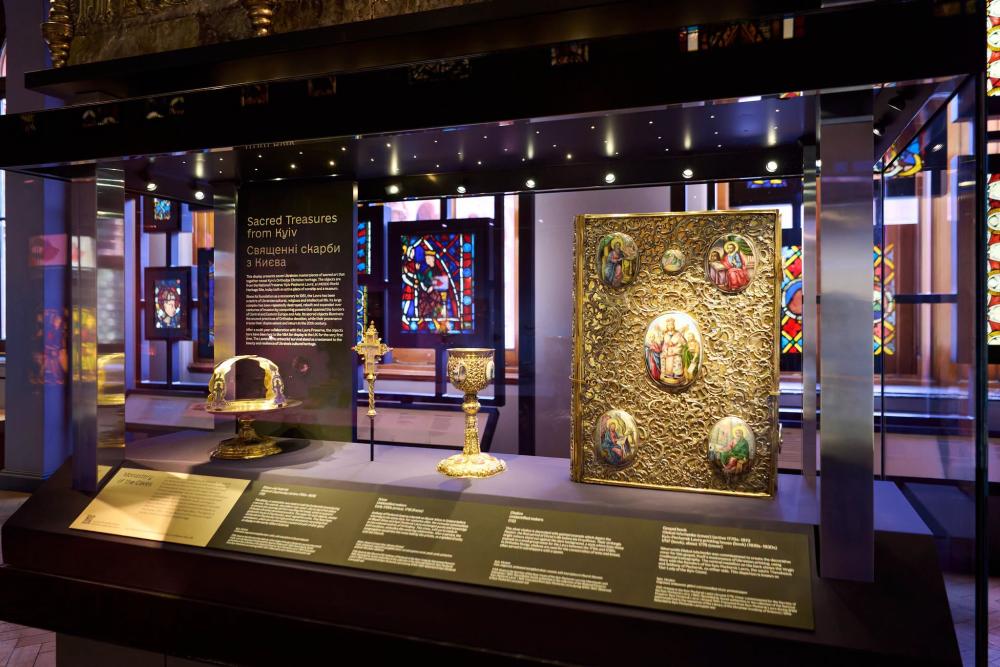
Seven works of Ukrainian sacred art were brought to London from the collection of the Kyiv-Pechersk Lavra National Reserve: an icon of the Exaltation of the Cross, an altar Gospel-Aprakos, a chalice, a paten, an asterisk, a tabernacle and a blessing cross. Most of these items were made by 18th-century Kyiv goldsmiths, among them Hryhorii Chyzhevskyi and Oleksii Ishchenko. They are also the makers of the two pairs of Royal Doors on display at the V&A.
So the objects from Kyiv did not simply travel to an exhibition abroad. They help to see the Royal Doors in the artistic context to which they belong: together with works of the same tradition and era.
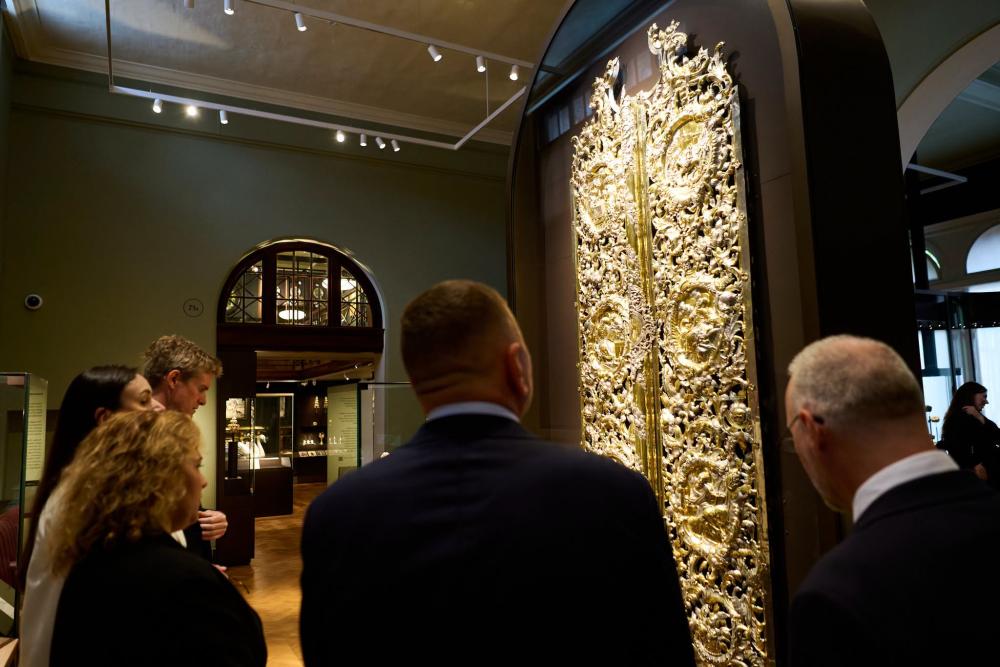
The display is located in the Sacred Silver and Stained Glass rooms and the Silver Galleries and runs until 17 September 2027. Admission is free.
How museums are rethinking their collections
The V&A was created as a place where an object was meant to teach: to show the maker's skill, the properties of the material, the technology and the possibilities of design. Over more than 170 years this idea has become much broader.
Today museums also have to answer other questions: where does an object come from, how did it enter the collection and has it been correctly attributed? The V&A itself researches the provenance of its collections and acknowledges that the history of some objects is linked to coercion, violence, unjust practices and the colonial past.
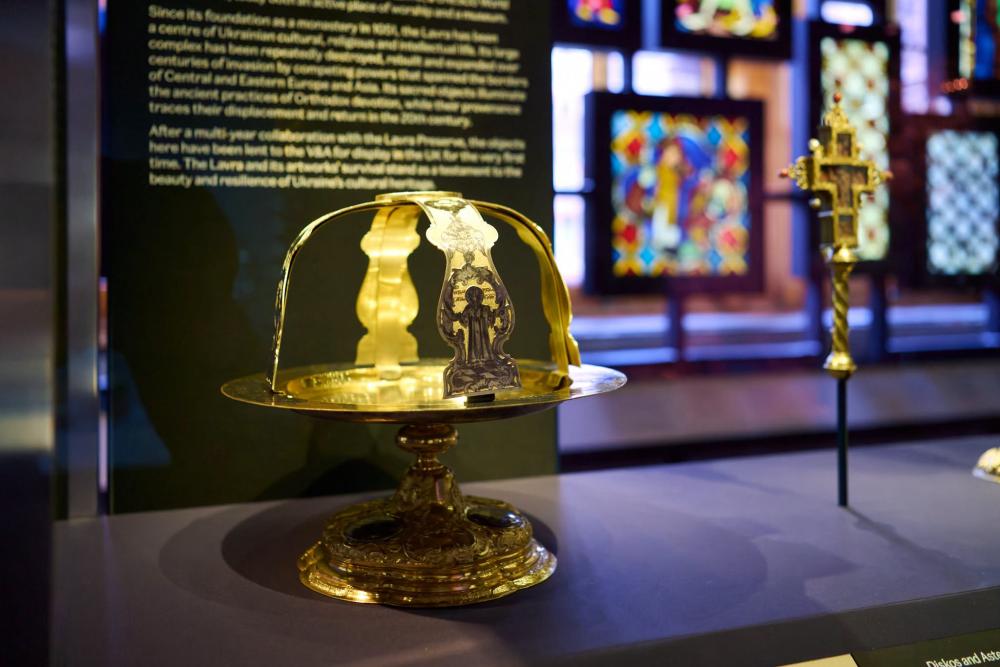
The story of cooperation between the V&A and the Kyiv-Pechersk Lavra shows well how this approach works in practice. Ukrainian museum professionals do not simply provide objects for an exhibition: they take part in research, attribution and shaping the story of their own cultural heritage.
Ukrainian Baroque in one of London's best-known museums appears not as a separate exotic page but as part of a much broader history of European art and craftsmanship.
Photos: Sandra Ebert (@sandra_ebert)