Image and form: masterpieces of Ukrainian sculptors
Ukrainian sculpture as a language of national memory
What is sculpture: a cold form or a living presence? In the case of Ukrainian masters the answer is always deeper: it is a conversation with the past and the future through touching the material. Wood, stone, clay or bronze in the hands of artists become images of strength, grief, beauty and resistance that cannot fail to be felt.
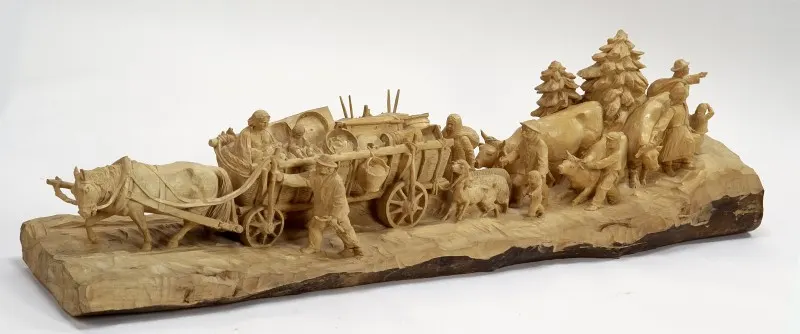
Ukrainian sculpture developed in difficult historical conditions: from distinctive folk wooden sculpture to the monuments of different eras, avant-garde experiments and intimate works of independent Ukraine. It was created by those who did not simply work with form but embodied the national spirit in material.
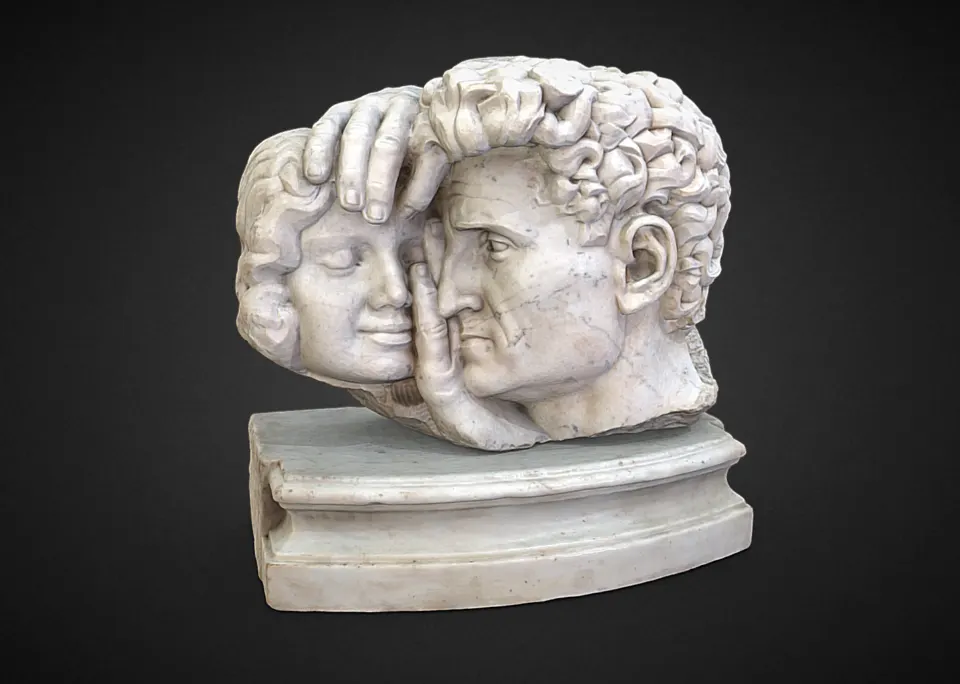
Ivan Makohon, “Head of a Girl” (1934)
This is an intimate sculptural composition striking in its subtle psychology and lyricism. The author skilfully conveys not only the features of a child's face but also a state of inner calm, concentration and dreaminess. The model has a clearly defined oval face with soft lines, a slight smile and large eyes, which together form the image of a child full of dignity and warmth.
Despite its outward simplicity, the sculpture is very alive thanks to the slight asymmetry and naturalness of the forms. It embodies a certain archetype of childhood, created in an era when art sought to combine realism with inner depth. Makohon, known as a master of monumental and portrait sculpture, shows delicacy in working with form in this piece, which highlights his versatility as an artist.
Alexander Archipenko, “Female Figure” (1914)
A vivid example of the artist's avant-garde approach to the human body, embodied in an innovative Cubist-Constructivist form. It is not a literal depiction of a woman but rather her generalised, geometrised embodiment, a sculptural formula that unites body and space. In this work Archipenko departs from traditional naturalistic sculpture. He “breaks down” the figure into simple volumes (cylinders, planes, curves), fitting the female body into an almost architectural construction.
Especially striking is the innovative use of internal voids, which not only create rhythm in the composition but also become a full element of the form. Emptiness here is no less important than material: it “models” the body just as volume does.
Yuliia Ukader, “He Who Breaks Dams”
A powerful image of strength, breakthrough and elemental energy embodied in a human figure. The work captivates with its dynamism and tension: it is not a static depiction but a moment of maximum action, when body and spirit merge in a single thrust. The figure is shown at the moment of effort, muscles tensed, arms stretched forward as if struggling against an invisible obstacle. The composition is built so that the whole silhouette seems directed forward: it is movement, breakthrough, inner explosion.
The sculpture conveys the metaphor of a person who breaks boundaries and bursts dams, literal or symbolic. The work echoes the modernist searches of the 20th century but has its own voice: one feels a Ukrainian context, a connection with the land, with the mythology of strength and the gesture of liberation. “He Who Breaks Dams” is not just a hero; it is the archetype of a person who changes the course of events, breaks free of limitations and opens a new current.
Leonid Pozen, “Lirnyk with a Guide” (1884)
A penetrating scene from folk life, created with deep psychology and attention to detail. It depicts two wandering characters, a blind lirnyk (hurdy-gurdy player) and his young guide, typical of 19th-century Ukrainian village life.
The lirnyk sits holding the lyre on his knees, his face concentrated, with notes of weariness and dignity. He is a symbol of the people's spiritual life, a bearer of the song tradition who passes on stories, dumy and prayers. Next to him is the boy guide, standing and leaning towards the elder, with a simple but attentive expression. His pose conveys care and closeness, as well as respect for knowledge and experience.
Ivan Kavaleridze, “Self-Portrait”
This is a deeply personal and at the same time monumental sculpture that embodies the spirit of the artist as creator and thinker. In it Kavaleridze appears not only as a sculptor but as a man of his era, immersed in inner reflection, calm but full of strength. The artist's face is rendered in a generalised way, with massive forms and geometrised features characteristic of his style. The gaze is directed forward, as if into the future, focused and serious.
The sculptor does not idealise himself: he depicts a personality fused with the material, a person who himself becomes part of stone, history and time. The form of the work is laconic and restrained: hard planes, clear lines, the sculptural mass working as a single whole. It is a self-portrait not as a portrait of appearance but as an embodiment of an inner state: introspection, strength of spirit, resilience.
These sculptures belong to the collection of the National Art Museum of Ukraine.
Every work of Ukrainian sculpture is a frozen gesture of time, a form in which more can be read than in words.
Today, when many sculptures are being destroyed or need restoration, it is important not only to talk about them but also to preserve, document and open them to the world. Because image and form are how a nation speaks about itself. And the voice of Ukrainian sculptors is strong, sincere and recognisable. One only has to listen.